
Published: September 2026
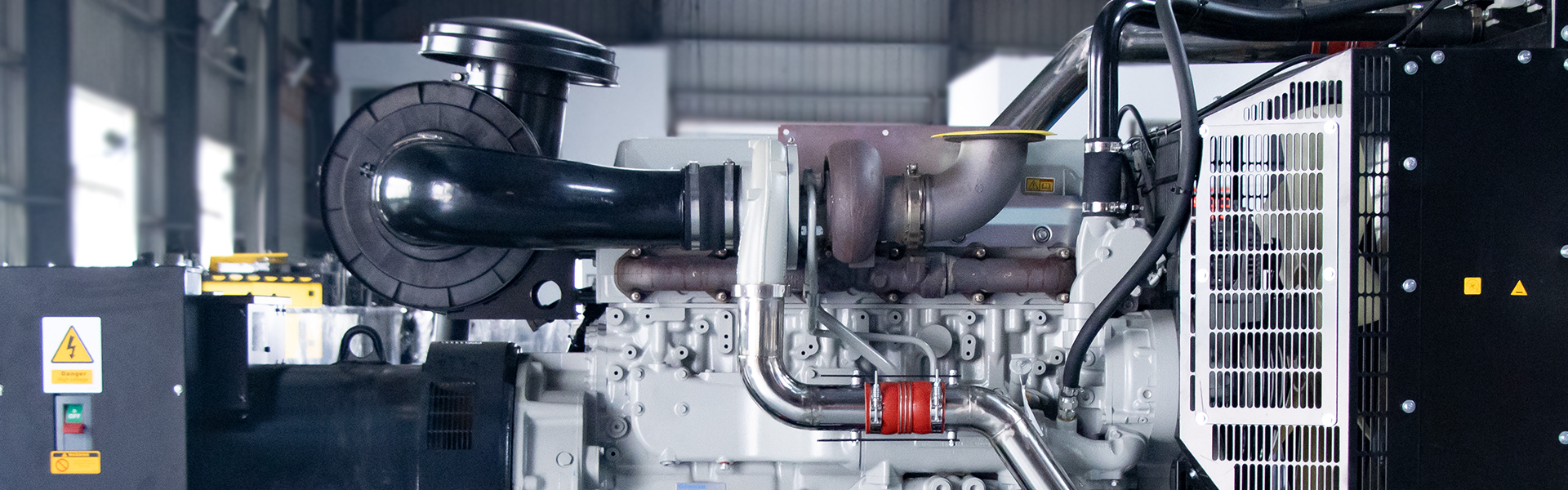
A diesel generator set (diesel genset) is a power generation system that combines a diesel engine with an alternator to produce electricity.
When the main power supply fails, the diesel engine uses fuel to generate mechanical power. The alternator then converts this mechanical power into electrical energy, which can be supplied to buildings, equipment, construction sites, factories, and other electrical loads.
Diesel generator sets are widely used because they offer reliable power output, good fuel efficiency, high load capacity, and long operating life. They can be used as emergency backup power or, in remote areas, as a primary power source.
The right generator, however, depends on factors such as power demand, operating hours, load characteristics, fuel consumption, environment, and required backup time.
A diesel generator set is an integrated power generation system consisting primarily of a diesel engine and an alternator.
The engine provides the mechanical power required to rotate the alternator. As the alternator rotates, it generates electrical energy that can be delivered to connected equipment.
A complete genset normally includes additional systems that allow the equipment to operate safely and reliably, including:
Depending on the application, a generator may also be equipped with an automatic transfer switch (ATS), remote monitoring system, trailer, weatherproof enclosure, or other accessories.
The operating principle is relatively simple.
Diesel fuel is stored in the fuel tank and delivered to the engine through the fuel system.
Inside the diesel engine, combustion generates power that drives the engine crankshaft.
The crankshaft is mechanically connected to the alternator. When the engine runs, it rotates the alternator.
The alternator converts the mechanical energy from the engine into electrical energy.
The generated electricity is regulated and supplied to connected electrical equipment.
In an automatic backup system, an ATS can detect a failure of the main power supply and start the generator automatically, depending on the system configuration.
Understanding the main components makes it easier to compare different generator models.
| Component | Main Function |
|---|---|
| Diesel Engine | Provides mechanical power |
| Alternator | Converts mechanical power into electricity |
| Fuel System | Stores and supplies diesel fuel |
| Cooling System | Controls engine temperature |
| Lubrication System | Reduces friction and protects moving parts |
| Starting System | Starts the engine using a battery and starter motor |
| Control Panel | Monitors and controls generator operation |
| Exhaust System | Removes combustion gases |
| Fuel Tank | Stores fuel for operation |
| Base Frame | Supports and protects the generator assembly |
The quality and specifications of these components directly affect the generator's performance, fuel consumption, service life, and operating stability.
Diesel gensets are used wherever reliable electrical power is required.
Construction projects often operate in locations where grid electricity is unavailable or temporary.
Generators can supply power for:
Factories may use diesel generators as standby power to reduce production interruptions during grid outages.
Hospitals require reliable electricity for critical systems and equipment. Generator systems can provide emergency power when the main supply is interrupted.
Mining sites and remote industrial projects may have limited access to the electrical grid. In these environments, generator sets can serve as an important primary or supplementary power source.
Shopping centers, offices, hotels, warehouses, and other commercial facilities may use gensets for emergency backup power.
Diesel generators can provide power for:
Diesel and petrol generators are both capable of producing electricity, but they are generally suited to different applications.
| Feature | Diesel Generator | Petrol Generator |
|---|---|---|
| Typical application | Medium/heavy-duty use | Light-duty use |
| Fuel efficiency | Generally higher for sustained loads | Generally lower for sustained loads |
| Heavy-load operation | Well suited | More limited depending on model |
| Long operating periods | Suitable | Usually less suitable |
| Initial equipment cost | Often higher | Often lower |
| Engine durability | Generally designed for demanding applications | Generally suited to lighter applications |
| Maintenance | Requires regular maintenance | Requires regular maintenance |
| Common applications | Construction, industry, commercial backup | Home, small equipment, light-duty backup |
The appropriate choice depends on the required capacity, operating conditions, running hours, and total cost of ownership rather than fuel type alone.
One important factor when purchasing a diesel generator is understanding its power rating.
Generators may be designed for different operating modes.
Standby generators are primarily intended for emergency situations when the normal power supply fails.
They are commonly used in:
Prime-rated generators can operate for extended periods and are designed for applications where the generator serves as the main power source.
They may be used on:
Continuous-rated generators are designed for applications requiring a relatively constant power supply for extended operation.
Always check the manufacturer's rating and operating conditions before using a generator for continuous or prime-power applications.
Choosing a generator should start with the actual electrical load, not simply the desired generator size.
First, identify the equipment that the generator needs to operate.
For example:
Special attention should be paid to equipment with high starting currents, particularly motors and pumps.
A generator used for occasional emergency backup has different requirements from one expected to operate for many hours every day.
Long operating periods make factors such as:
increasingly important.
The generator must match the electrical requirements of the intended application.
Typical specifications include:
Outdoor and harsh environments may require additional protection.
Depending on the application, you may need:
Consider a small construction project that needs temporary electricity for:
| Equipment | Approx. Running Load |
|---|---|
| Site lighting | 5 kW |
| Water pump | 10 kW |
| Power tools | 8 kW |
| Compressor | 15 kW |
| Temporary office | 5 kW |
| Estimated total | 43 kW |
The selection should not simply be based on the 43 kW total.
The starting characteristics of the pump and compressor, the possibility of simultaneous operation, and the desired operating margin should also be evaluated.
For this type of application, a supplier may recommend a generator in an appropriate kVA range after reviewing the actual load profile and starting requirements.
This illustrates an important point:
Generator selection is a load-management decision, not simply a kW calculation.
The final model should be confirmed based on the manufacturer's technical specifications and the customer's actual operating conditions.
Fuel consumption is an important consideration when estimating the operating cost of a genset.
Actual consumption can vary depending on:
A generator operating at a low load does not necessarily achieve its best fuel economy.
For commercial and industrial users, it is therefore useful to compare fuel consumption at different load levels, rather than looking at a single fuel-consumption figure.
Regular maintenance helps reduce unexpected downtime.
A basic maintenance program may include:
More comprehensive inspections should be performed according to the engine and generator manufacturer's recommended service schedule.
Maintenance intervals can vary considerably between models, so the manufacturer's service manual should always be followed.
Reliable power supply
Diesel generator sets can provide stable electricity when grid power is unavailable.
Suitable for demanding applications
They are widely used for industrial and commercial loads.
Good fuel efficiency
Diesel engines can provide efficient operation, particularly under appropriate sustained loads.
Long service life
With proper maintenance, diesel engines can operate for many years.
Flexible applications
They can be configured for standby, prime, or continuous applications depending on the model and rating.
Noise and vibration
Traditional diesel generators can produce significant noise and vibration.
Exhaust emissions
Diesel combustion produces exhaust gases, so appropriate ventilation and emissions controls may be required.
Maintenance requirements
Regular servicing is necessary for reliable operation.
Higher initial investment
A diesel genset can have a higher upfront cost than some smaller petrol or portable generator options.
A diesel generator set is a power generation system that combines a diesel engine with an alternator to produce electricity.
The diesel engine converts fuel energy into mechanical power. The engine rotates the alternator, which converts the mechanical energy into electrical energy.
They are commonly used for emergency backup, construction sites, industrial facilities, commercial buildings, agriculture, mining, telecommunications, and remote power applications.
Start by calculating the total electrical load in kW or kVA. Then consider motor starting currents, simultaneous loads, operating conditions, and an appropriate operating margin.
Both are important. Generator capacity is commonly specified in kVA, while electrical equipment may be rated in kW. The relationship between them depends on the power factor.
Some diesel generators are specifically designed for prime or continuous applications. However, the allowable operating conditions depend on the specific engine and generator rating.
There is no single service interval that applies to every generator. Maintenance should follow the engine manufacturer's recommended schedule and may also depend on operating hours and conditions.
Yes, but the installation must provide appropriate protection from weather and ensure adequate ventilation and exhaust discharge. Outdoor-rated enclosures may be required depending on the environment.
ATS stands for Automatic Transfer Switch. It can automatically transfer an electrical load between the main power supply and generator supply when configured as part of an automatic backup system.
Key specifications include:
A diesel generator set is more than simply an engine connected to an alternator. It is a complete power system designed to provide electricity when grid power is unavailable or when an independent power source is required.
Its reliability, fuel efficiency, load capacity, and adaptability make diesel gensets suitable for a wide range of applications, from temporary construction power to industrial and commercial backup systems.
However, the largest generator is not necessarily the right generator. The correct selection should be based on the actual load, starting requirements, operating hours, environment, fuel consumption, and required power mode.
By evaluating these factors before purchase, users can select a diesel generator that provides reliable performance while controlling operating and maintenance costs.
 NO.2 XIAHE ROAD GANZHE STREET,MINHOU COUNTY,FUZHOU FUJIAN CHINA
Continue lendo, mantenha-se informado, inscreva-se e convidamos você a nos dizer o que pensa.


direito autoral
@ 2026 LEHUI (FUZHOU) INTELLIGENT EQUIPMENT MANUFACTURING CO., LTD Todos os direitos reservados.
 SUPORTADO POR REDE
 português
 English
 français
 Deutsch
 italiano
 русский
 español
 العربية
 Melayu
 Indonesia
